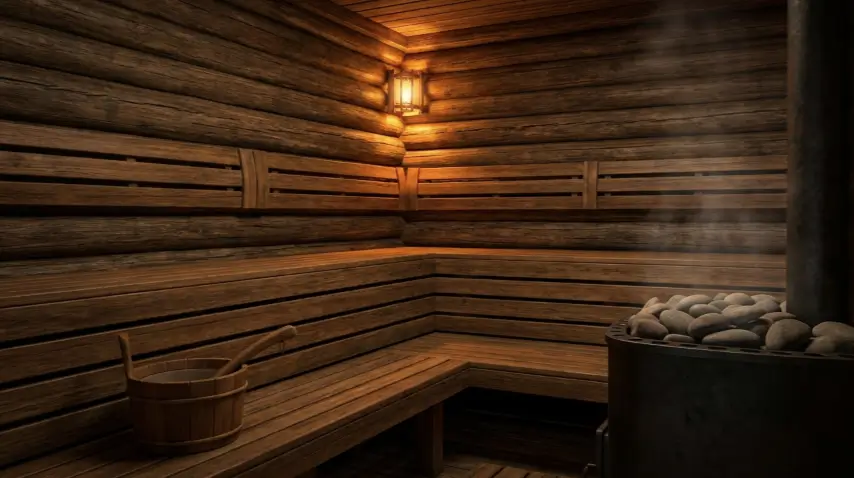
A traditional sauna’s total cost for a beginner typically breaks into four pieces: the heater and stones, the cedar or heat-treated wood structure, the electrical circuit, and site prep if it is not going into an existing room, and any one of those four can swing the final number as much as the unit’s advertised price. The questions below are the ones beginners tend to ask once they start comparing real quotes instead of just browsing heater listings.
Does the Heater’s Price Include Everything Needed to Run It?
No. A heater’s listed price generally covers the unit and sometimes the stones, but not the electrical circuit needed to power it, which is a separate cost that depends on the heater’s voltage and amperage draw and the distance from the home’s electrical panel. Most heaters above a small size need a dedicated 240V circuit, and that circuit’s cost has little to do with which heater brand or model gets chosen.
Why Do Two Quotes for the Same Size Sauna Come Back So Different?
Two contractors quoting what sounds like the same project often price different scopes, one including wood, vapor barrier, and finish work in a single number, the other quoting the heater and framing only and leaving wood finish and electrical as separate add-ons. Asking for an itemized quote, heater, wood and materials, vapor barrier, electrical, and any site prep listed as separate lines, is the most reliable way to compare two bids fairly.
Is Cedar Worth the Extra Cost Over Treated Wood?
Western red cedar costs more than heat-treated hemlock or aspen, and for a beginner on a budget, treated wood is a reasonable place to save, since it performs similarly for benches and wall panels once properly kiln-treated for high-heat use. Where beginners should not cut cost is the vapor barrier behind the panels, since skipping or under-installing that foil layer risks hidden moisture damage that costs far more to fix later than it would have cost to do right initially.
What Does the Electrical Work Actually Add to the Bill?
This is usually the most underestimated line item on a traditional sauna quote, because its cost tracks how far the sauna sits from the electrical panel rather than which heater gets chosen. Adding a circuit inside an unfinished basement, where the panel might be twenty feet away through open framing, tends to stay a modest add. Trenching a line under a patio or across a finished yard to reach a detached cabin is a different order of job entirely, and that gap is worth pricing out with an electrician before the heater purchase is locked in, not after.
Does Converting an Existing Room Really Cost Less Than a New Build?
Generally yes. A basement corner, garage bay, or similar existing room already has a foundation, walls, and roof, which removes an entire category of cost that a freestanding new structure has to cover before any interior sauna work starts. A beginner comparing a conversion against a new outbuilding should expect the new build to cost meaningfully more for a comparable interior size, even with an identical heater.
Where Is a Good Place to Start Comparing Real Numbers?
Once the room’s size and heater kW range are set, comparing heater pricing across brands and control types, including what buyers can browse SweatDecks traditional saunas for at that kW range, gives a beginner a real anchor point before collecting separate wood, electrical, and site-prep quotes for the rest of the project. Treating the heater price as the whole budget, rather than one line among several, is a common way beginners underestimate a traditional sauna’s true cost.
See also: How News Monitoring Helps Businesses Respond Faster to Industry Trends
Does the Cost Buy Anything Backed by Research?
Cohort research on Finnish sauna bathers, including a large study published in JAMA Internal Medicine and a related analysis in Annals of Medicine looking at cardiorespiratory fitness, associates frequent sauna sessions with lower rates of fatal cardiovascular events. This is association from observational data, not proof of cause and effect from any single unit or brand, and a beginner should weigh it as one factor among several practical ones, not the deciding one on its own.
What Ongoing Costs Should a Beginner Plan For After Install?
Beyond the one-time build cost, a traditional sauna adds a modest amount to the monthly electric bill depending on session frequency and heater kW, along with occasional stone replacement every few years as the rocks crack and lose their heat-holding ability. Cedar or treated wood benches need the occasional wipe-down and a light sand if the surface starts to roughen, but neither is a significant recurring expense compared with the initial build. Budgeting a small annual amount for stones and minor wood upkeep keeps the sauna performing the way it did on day one without any surprise repair bill later.
Is It Cheaper to Buy a Kit or Build Custom?
A prefabricated kit, shipped as panels ready to assemble, generally costs less in labor than a fully custom build, since the cutting and fitting work is already done at the factory. A custom build offers more flexibility on room shape and bench layout, which matters for an oddly shaped basement corner or a specific backyard footprint, but that flexibility usually comes at a labor premium over a kit sized to a standard footprint. Beginners with a standard rectangular space and a simple two-tier bench layout are the ones most likely to save real money going the kit route.
Frequently Asked Questions
What is the single most underestimated cost in a traditional sauna project?
Electrical work is the most commonly underestimated line, since its cost depends on distance from the home’s panel rather than on the heater itself, and a detached outbuilding install can rival the heater’s own price.
Should a beginner choose cedar or treated wood to save money?
Heat-treated hemlock or aspen is a reasonable lower-cost substitute for cedar on benches and walls, but the vapor barrier behind the panels should not be the place to cut cost, since fixing hidden moisture damage later costs far more.
Does a room conversion cost less than building a new sauna structure?
Yes in most cases, since a conversion already has a foundation, walls, and roof in place, while a freestanding new structure has to cover that cost separately before interior sauna work even begins.
How can a beginner compare two very different sauna quotes fairly?
Ask both contractors for an itemized quote separating heater, wood and materials, vapor barrier, electrical, and site prep, since a single lump-sum number often hides different assumptions about what is actually included.
References
- Association between sauna bathing and fatal cardiovascular and all-cause mortality events, JAMA Internal Medicine, 2015
- Joint associations of sauna bathing and cardiorespiratory fitness on cardiovascular and all-cause mortality risk, Annals of Medicine, 2018
- Short-term effects of Finnish sauna bathing on blood-based markers of cardiovascular function in non-naive sauna users, Heart and Vessels, 2018
By Graham Kessler