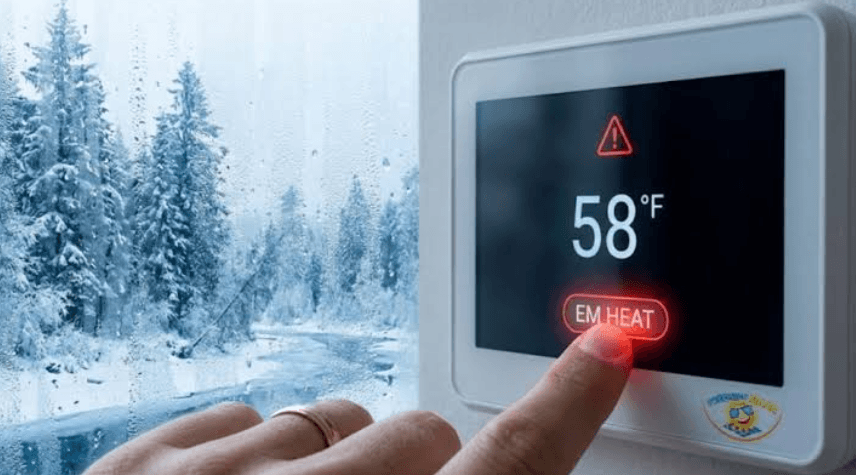
The short answer for a household new to western Washington is that the switch labeled emergency heat is the priciest thing on your wall, and pressing it out of habit is what turns a $120 power bill into a $340 one. A heat pump is not a furnace wearing a different badge. It moves heat into the house instead of burning something to make it, which is why it runs long and quiet and blows air that feels cool against the back of your hand, and why the electric resistance strips bolted in behind it were meant as a backstop rather than a setting. Families arriving from Phoenix or Las Vegas tend to operate the thing the way they operated gas heat, and the December statement is where that habit shows up. The argument of this guide is straightforward: one heating service Lacey WA households can schedule in an afternoon does more for that bill than any thermostat discipline you adopt on your own. Settings beat willpower.
A Heat Pump Warms Differently Than a Furnace
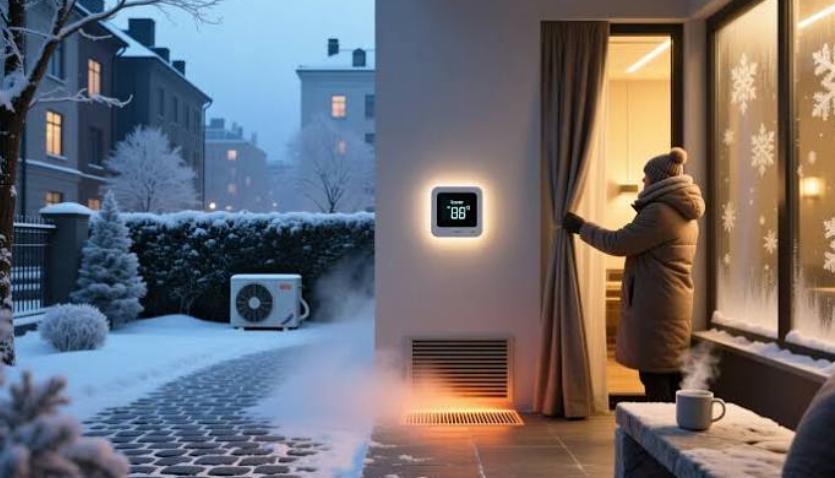
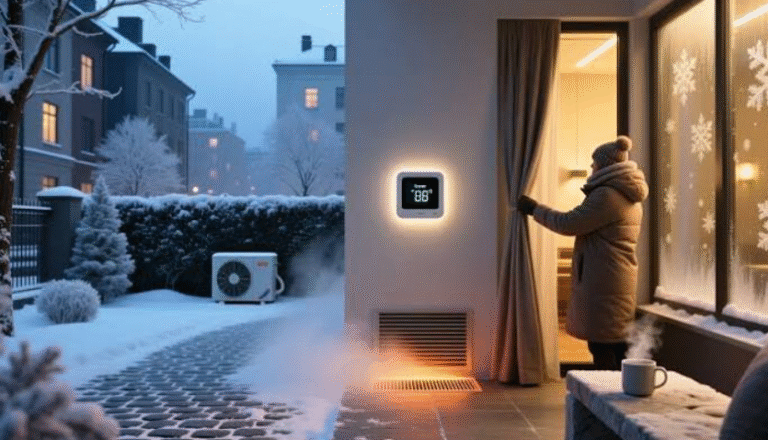
A gas furnace pushes air out of the registers somewhere around 130 degrees. It fires, it roars, the room warms quickly, it shuts off. A heat pump delivers air closer to 95 or 100 degrees and will run for hours to accomplish the same thing. Body temperature is 98.6, so that supply air honestly does feel cool on your skin even while the house is holding 68 without trouble. The mistake nearly every newcomer makes is reading that sensation as failure.
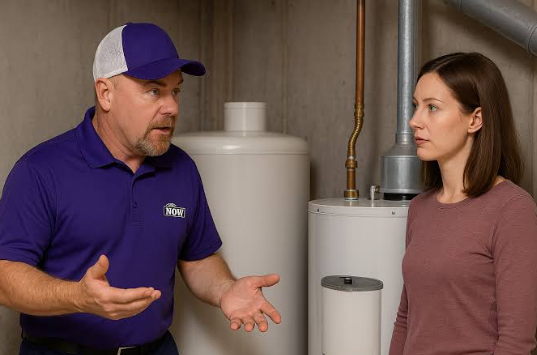
The call we take most often during a family’s first Northwest winter is not a broken system at all. What usually turns up is a heat pump doing exactly what it was engineered to do, standing next to a homeowner who has been overriding it since Thanksgiving. Nothing is wrong with the equipment. The mismatch sits between how this equipment behaves and what the last house taught you to expect.
Deep Overnight Setbacks Wake the Backup Strips
Dropping a thermostat eight degrees at bedtime is sound advice with a furnace. With a heat pump it can quietly cost you money. The mechanism is worth understanding, because it is not intuitive. When the morning setpoint jumps from 60 back up to 68, the thermostat sees a gap it treats as an emergency and calls in auxiliary heat to close it fast. Those strips are electric resistance heat, and depending on how the air handler was built they can draw somewhere between five and fifteen kilowatts while they run, against maybe two for the compressor alone. So the surest way to erase a night of savings is to demand a rapid recovery every morning, for ninety mornings straight. A heat pump saves money by holding a steady temperature, not by chasing one back up at dawn.
A shallower setback of two or three degrees usually keeps the compressor doing the work and leaves the strips out of it. Some thermostats manage this themselves with a smart recovery feature that starts the climb early and gently. Plenty of the thermostats we find in 2004-era Lacey houses either lack it or have it switched off, left that way by an installer in a hurry a decade ago. That one checkbox is worth more than most people would guess.
Lukewarm Air Is Normal Heat Pump Behavior
Every heat pump has what installers call a balance point, meaning the outdoor temperature below which the unit by itself can no longer keep up with the heat leaking out of the house. Above that line, the compressor carries the entire load on its own. Below it, something has to help. In a system that was actually set up, the handoff happens down in the mid twenties and lasts only as long as the cold snap does. In a system nobody configured, it can start happening at 40 degrees because an outdoor lockout was never programmed, and in Thurston County 40 degrees describes most of the winter.
So lukewarm air at the register on a 38 degree morning is not a symptom. It is the machine sitting in its efficient range, doing the cheap version of its job. Pressing emergency heat there does warm the air you feel, and it also sidelines the most efficient piece of equipment you own. Correcting the staging is routine work, and a heating service Lacey WA homeowners schedule before the first cold snap will catch it in about twenty minutes.
Winter Bills Track the Coldest Weeks Closely
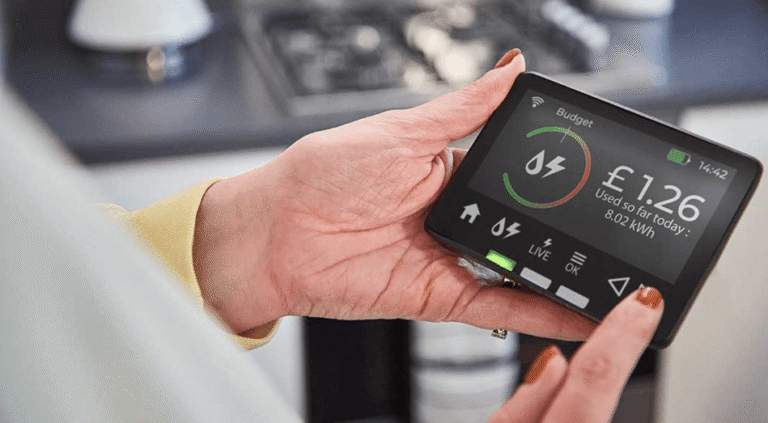
Line up a year of statements and the shape gets obvious fast. Three or four weeks do most of the damage. Say a $340 December lands in a two-story Lacey house: that total is rarely spread evenly across 31 days, and it usually traces back to a ten-day cold stretch when the strips ran every single morning, padded out by ordinary lights and laundry. Those strips do not sip electricity. They gulp it.
What I cannot tell you, and what nobody can tell you from a statement alone, is precisely how many of those dollars belonged to the strips rather than the compressor. Utility meters do not itemize by component. Unless somebody has submetered the air handler circuit, the split is an estimate no matter who is doing the estimating, and I would rather say so than hand you a confident percentage I made up. The useful move is comparing one January against the next after the settings change, which is blunt but honest.
See also: How News Monitoring Helps Businesses Respond Faster to Industry Trends
A Service Visit Tunes Settings You Cannot See
A heating visit on a heat pump is mostly configuration rather than repair. The technician sets the staging so the compressor gets its turn before anything else energizes, programs an outdoor lockout so the strips cannot fire above a chosen temperature, checks static pressure and airflow because a starved return makes a healthy heat pump look weak, and confirms the thermostat is wired and configured for a heat pump instead of running a furnace profile left over from a previous install. Refrigerant charge gets verified too, since a system running a couple of pounds light leans on backup heat long before it should. None of that is visible from the hallway. All of it decides what you pay in January.
It helps to know where the rest of the year’s electricity goes as well. Department of Energy guidance, as it reads in August 2026, puts air conditioning at 18% of annual household electricity use across American homes, a share that swings by region with climate and cooling demand. In a Lacey house that ratio flips hard, because the same outdoor unit that cools you through six mild weeks is the one heating you for six months. Winter is where your money is, so winter is what the setup should be tuned for.
One Setup Call Changes the Whole Winter
Nobody expects you to become an HVAC person. You just have to stop running the system like the furnace you left behind in the desert, and let somebody set the handful of parameters that decide whether the resistance strips are a backstop or a default. A family arriving in September has time to get that handled before the first genuinely cold morning, while a family that waits for the December bill has already paid tuition on the lesson. The equipment in that 2004 house is probably fine. It is the settings that nobody ever checked.