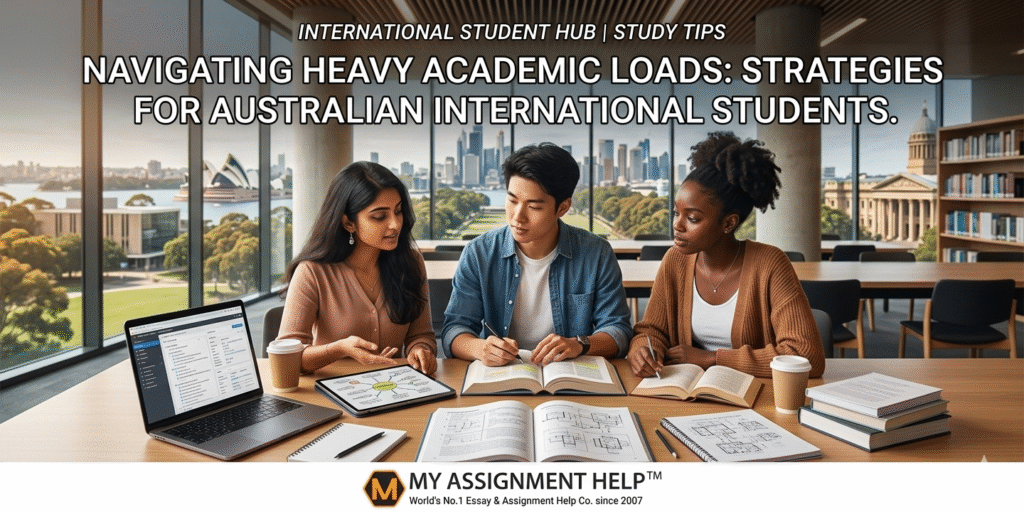
Australia remains one of the premier global destinations for higher education, hosting over 700,000 international students. While the allure of pristine beaches and world-class universities like the University of Melbourne or ANU is strong, the academic reality is often a high-pressure environment. For many, the transition involves mastering a new language, adapting to the Australian Qualifications Framework (AQF), and managing a rigorous schedule of lectures, tutorials, and assessments.
Managing a heavy academic load in Australia isn’t just about studying harder; it’s about studying smarter. Between the strict 48-hour-per-fortnight work limit and the requirement to maintain “satisfactory academic progress” for Visa Subclass 500, the stakes are incredibly high.
The Reality of the ‘Aussie’ Academic Pressure
According to a report by the Tertiary Education Quality and Standards Agency (TEQSA), international students often face “acculturative stress,” which directly impacts academic performance. The Australian system emphasizes critical analysis over rote learning, a shift that can be jarring for students coming from more traditional educational backgrounds.
When deadlines for major projects, mid-semester exams, and weekly quizzes converge, the mental toll is significant. This is where strategic resource management becomes essential. Many students find that seeking professional assignment help online allows them to bridge the gap between complex Australian marking rubrics and their current level of understanding, providing a blueprint for academic excellence while managing their mental well-being.
Strategies Used by Successful International Students
1. Mastering the Art of “Unit Mapping”
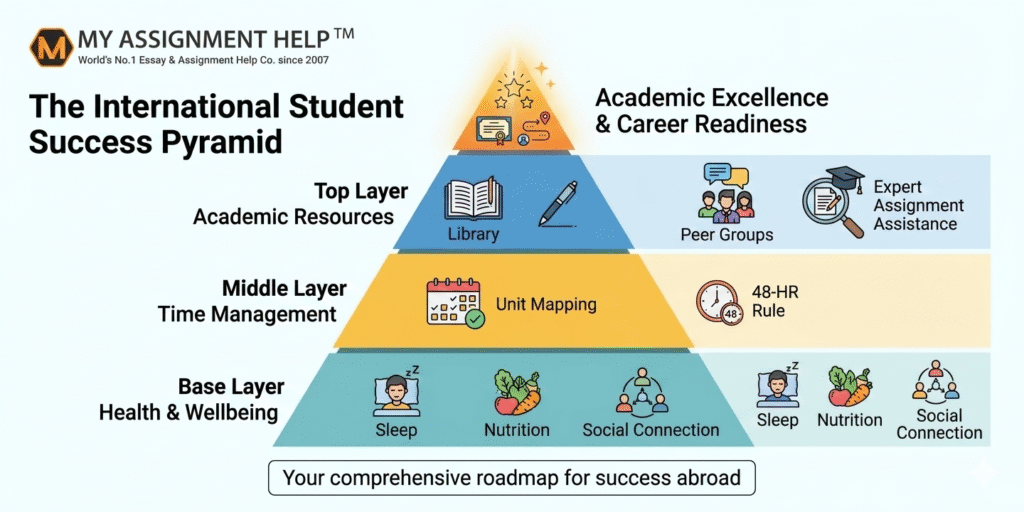
Successful students in Australia don’t just look at the next deadline; they map out the entire semester. Australian universities provide a “Unit Guide” for every subject. This document is the holy grail. It outlines every assessment, its weightage, and the specific learning outcomes required.
By using digital tools like Notion or Trello, students break down a 3,000-word research essay into smaller, manageable chunks—research, drafting, referencing, and proofreading—to avoid the dreaded “Cramming Culture.”
2. Leveraging Vocational Support and Specialized Resources
For those enrolled in vocational education (VET) or community services courses, the workload is often competency-based and highly technical. For instance, students pursuing childcare or disability support qualifications often struggle with specific modules. Navigating complex units like CHC33015 Assessment Answers requires a deep understanding of Australian National Standards. Students often use such specialized guides to ensure their practical assessments align with workplace health and safety (WHS) and legal requirements.
3. The “Library Culture” and Peer Study Groups
Australian campuses are designed for collaboration. The “Pass” (Peer Assisted Study Sessions) programs are highly effective. Data from the Australian Department of Education suggests that students who participate in peer-led study groups see an average increase of 10-15% in their final grades. These sessions allow international students to practice their English communication skills in a low-stakes environment while clarifying complex theories.
4. Part-Time Work vs. Study Balance
Since July 2023, the work hour cap for international students returned to 48 hours per fortnight. Managing a job at a local café in Surry Hills or a retail outlet in Melbourne Central while maintaining a Distinction average requires a “fixed-block” schedule. Students often dedicate 4 days a week strictly to university and 2 days to work, leaving one day for “Self-Care Sunday” to prevent burnout.
Data-Driven Insights: Why Students Struggle
A study published in the Journal of International Students highlights that nearly 40% of international students in Australia experience high levels of stress related to academic integrity and referencing styles (like APA 7th or Harvard). The fear of “accidental plagiarism” is a major stressor.
To combat this, Australian universities provide access to Turnitin, but understanding the report is a skill in itself. Utilizing external academic mentoring helps students learn how to paraphrase correctly and cite sources according to Australian standards, ensuring their hard work isn’t discounted by technical errors.
Key Takeaways
- Understand the Rubric: Always read the marking criteria in your Unit Guide before starting an assignment.
- Prioritize Health: Lack of sleep is the leading cause of “brain fog” during exam periods.
- Use University Services: Most Aussie unis offer free writing workshops and English language support.
- External Support is Vital: Don’t be afraid to use professional academic services to clarify complex assessment requirements.
- Respect the Work Cap: Over-working leads to visa complications and academic failure.
Author Bio: Sarah Jenkins
Senior Academic Consultant at MyAssignmentHelp Sarah Jenkins is a former university tutor with over 10 years of experience in the Australian higher education sector. Based in Sydney, she specializes in helping international students navigate the complexities of the AQF framework and academic integrity. Sarah is passionate about empowering students to achieve their career goals through strategic learning and mental health awareness.
Frequently Asked Questions (FAQs)
Q1: Is it legal to get assignment help in Australia?
A: Yes, seeking tutoring and academic guidance is legal and encouraged. However, students must use these services as a learning tool to improve their own work and ensure they follow their university’s academic integrity policies.
Q2: How do I manage my work hours without affecting my studies?
A: Most students find success by working weekend shifts and dedicating weekdays to library sessions. Always inform your employer of your exam dates at least two weeks in advance.
Q3: Why is the CHC33015 assessment considered difficult?
A: The CHC33015 (Certificate III in Individual Support) involves heavy compliance with Australian healthcare regulations. It requires precise documentation, which can be challenging for those new to the Australian medical or aged care system.
Q4: What is the best referencing style for Australian Universities?
A: It varies by faculty. Most Business and Arts faculties use APA 7th or Harvard, while Law students use AGLC. Always check your specific Unit Guide.
References:
- Tertiary Education Quality and Standards Agency (TEQSA) – Student Wellbeing Reports.
- Australian Department of Education – International Student Data 2023-24.
- Journal of International Students – “Academic Transition and Stress in Australian Higher Education.”
- Department of Home Affairs – Student Visa (Subclass 500) Work Conditions.