Small bathrooms are, frankly, a headache. Every square inch you have comes with trade-offs: the door swings into the vanity, towels end up piled on the toilet tank, and somehow the layout still manages to feel cramped even after you’ve cleared everything out. If you’ve ever tried getting dressed in a 5-by-8-foot bath, you know exactly what I mean.
According to the EPA, showering alone accounts for nearly 17 percent of residential indoor water use, so that modest little room is working overtime regardless of how it feels. This guide walks you through the layout strategies, storage moves, fixture upgrades, and visual tricks that actually deliver results.
Before You Swing a Hammer, Make a Real Plan
Here’s the thing most people skip: strategy. Not a mood board. Not a Pinterest folder. An actual plan. Homeowners who dive into demolition without one tend to end up with toilet doors that barely clear the bowl and shower entries half-blocked by the vanity. Don’t be that person.
Measure Twice. Then Measure Again.
Once your goals are locked in, get precise measurements. Walls, ceiling height, door swing radius, window placement, and existing plumbing stack locations. Two inches off can kill a layout concept entirely, and you won’t discover that until you’re already mid-demo. Use painter’s tape on the floor or a free app to test compact bathroom layout solutions before committing to anything.
Standard clearances worth knowing: roughly 15 inches from the toilet centerline to any side wall, 21 inches in front of the toilet, and at least 24 inches of shower entry clearance. Always verify what your local code actually requires before finalizing the plan.
If you work with professionals experienced in bathroom remodeling, they’ll catch clearance conflicts before a single tile comes up, not during demolition. A firm like DCR Renovation & Construction in Montreal brings that kind of planning-phase expertise, and it genuinely saves money when applied early.
Get Clear on What You Actually Need From This Remodel
Before anything else, write down what success looks like for you. Is there more storage? Better flow? ADA accessibility? A shower that feels like a spa instead of a closet? Be honest. Then build a firm list, needs versus wants. Tub or walk-in shower? Single vanity or double? Small bathroom remodeling tips almost always start here, because getting your priorities straight prevents the most expensive layout mistakes you’ll ever make.
Good space-saving bathroom design really does start with protecting circulation. Carve out a clear path through the room first, then work backwards to figure out where everything else fits.
Tub or Walk-In Shower: The Decision That Changes Everything
With measurements done, one question reshapes your entire layout: keep the tub or convert to a walk-in shower? If no young kids live in the home and another bathroom already has a tub, removing it to maximize small bathroom space is almost always the right call. A curbless walk-in shower opens the floor plan dramatically, improves accessibility for everyone, and eliminates the visual bulk of a tub surround. It’s a bigger shift than it sounds.
Layouts That Actually Work in Tight Spaces
Planning sets your priorities. The right layout is how those priorities become reality.
Proven Configurations for Real Homes
The one-wall plumbing layout, toilet, vanity, and shower all sharing a single wall, is a reliable choice for narrow rooms. It concentrates plumbing runs and leaves the opposite wall wide open. A corner shower paired with a straight vanity across from it works well for standard 5-by-8-foot baths. And for awkward L-shapes or rooms with sloped ceilings, a staggered galley arrangement keeps pinch points from developing.
The Door Swap That Frees Nine Square Feet Instantly
A standard inswing door can steal up to nine square feet of interior floor space when it opens. Replace it with a pocket door or barn-style slider, and you immediately reclaim that area for circulation or storage. One caveat: check the wall cavity first for plumbing, electrical runs, or structural framing; those can complicate pocket door installation significantly.
Broken-Plan Zoning for Tiny Rooms
This one’s underused and genuinely clever. Broken-plan design uses partial dividers, glass half-walls, tiled pony walls, and subtle flooring transitions to separate the toilet, vanity, and shower zones without fully enclosing each one. The result reads as luxurious and organized without adding a single square foot. Worth serious consideration if your layout allows it.
Storage That Lives Inside the Walls
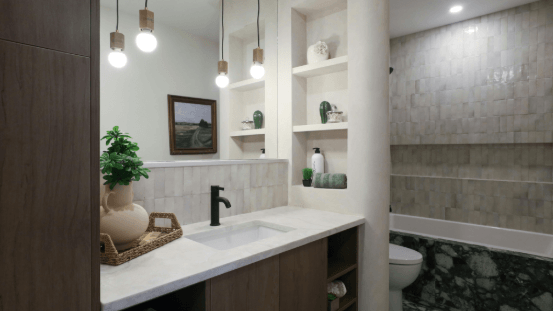
A smart layout gives you the foundation. But the storage you build directly into the architecture is what keeps the floor clear over time. Small bathroom storage ideas that disappear into the walls are consistently more effective than furniture stacked on top of an already limited floor plan.
Recessed Niches and Between-Stud Solutions
The stud cavity, typically 3.5 to 5.5 inches deep, is essentially free real estate you’re not using yet. Recessed medicine cabinets with mirrored fronts, shampoo niches inside the shower, and slim between-stud linen shelves all tap into space that wasn’t being counted before. Around wet areas, waterproofing is non-negotiable: cement board and proper membrane installation, full stop.
Going Vertical, Floor to Ceiling
Full-height cabinetry and tall linen towers make use of the wall surface that most people completely ignore. Match the cabinet color to the wall, and the tall storage stops feeling heavy. Add glass-front doors on the upper sections, and the whole room breathes more easily. Over-door shelving handles backup toiletries and guest towels without eating into prime real estate.
See also: Improving Home Security with Smart Installations
Under-Sink, Over-Toilet, and Corner Fixes
Pull-out trays and U-shaped drawer organizers work around plumbing to unlock under-sink space that usually becomes a graveyard for cleaning supplies. Over-the-toilet ladder shelves are stylish and genuinely practical. Corner sinks and triangular shelving units address dead corners, a problem that plagues almost every small bathroom layout.
Visual Tricks That Make the Room Feel Bigger
Layout handled. Storage sorted. Now the right visual choices can make your bathroom feel meaningfully larger than it actually is.
Light, Color, and Tile Selection
Soft whites, warm beiges, and pale grays reflect light and create a calm, continuous visual field across walls, floors, and cabinetry. Large-format tiles with minimal grout lines stretch proportions. High-contrast color schemes, while striking in photos, tend to fragment compact rooms into smaller-feeling zones.
Mirrors and Glass That Double Perceived Depth
An oversized mirror, or one running full height, visually doubles the room by reflecting both light and depth. Frameless glass shower enclosures maintain sightlines across the full bathroom width, which makes a genuinely measurable perceptual difference. Glossy wall tiles and metallic fixtures add reflectivity without requiring structural changes.
Layered Lighting That Eliminates Shadows
Recessed ambient lighting, vanity sconces at eye level, and LED strips inside niches or along toe-kicks together eliminate the dark pockets that make small bathrooms feel like caves. Dimmers let you shift from bright task lighting to warm, spa-like ambience in seconds. If a window isn’t possible, frosted glass panels or a solar tube can bring in natural light while preserving privacy.
Budget-Smart Approaches That Still Deliver
Innovation doesn’t require an unlimited budget. Strategic spending, focused on the right moves, consistently delivers the best outcomes in compact spaces.
According to the NAHB, bathroom remodels were cited as a common job by 65% of remodelers, meaning proven, repeatable solutions are widely available, and experienced professionals have refined them across hundreds of real projects.
High-Impact Changes Without Moving Plumbing
Swapping a bulky vanity for a slim-depth or floating version in the same location is one of the highest-return moves you can make. Replacing a shower curtain with a clear glass panel or curved rod visually expands the shower zone without touching a single supply line. Converting existing stud bays into recessed niches costs relatively little and returns meaningful, lasting storage.
Where to Spend More, Where to Pull Back
Splurge on frameless glass, quality lighting, and custom storage. Small rooms require less material overall, so upgrades cost less than in a larger bath. Save on tile by choosing simple white field tiles with a premium trim piece or accent strip. Ready-to-assemble vanities and modular storage systems perform well in compact spaces when they’re installed with care.
Frequently Asked Questions
How small can a full bathroom be and still feel comfortable?
Most designers consider 36 square feet (roughly 5 by 7 feet) a workable minimum for a full bath. With a corner shower, wall-hung toilet, and floating vanity, even that footprint can feel genuinely functional.
Which layout works best for a 5-by-8-foot bathroom if I want a walk-in shower?
A corner shower with a straight vanity on the opposite wall typically works best. It keeps plumbing concentrated, preserves a clear circulation path, and leaves wall space for recessed storage.
Are wall-hung toilets and vanities really worth the investment?
Yes, both free visible floor space, making the room feel larger and far easier to clean. Wall-hung toilets also let you use the concealed tank wall for shelving directly above.
What’s the best small bathroom storage idea for renters who can’t open walls?
Over-door organizers, adhesive rail systems inside cabinet doors, and ladder shelves provide real storage without permanent modifications. Freestanding corner units and magnetic strips work well, too.
How do I maximize space in a small bathroom on a tight budget?
Start by decluttering. Then add a recessed medicine cabinet, swap the door type, and replace the shower curtain with a curved rod or clear panel. None of those moves requires touching plumbing.
Your Small Bathroom Deserves Better Than “It’ll Do”
A tight footprint doesn’t mean you have to compromise on function or feel. With layout-first thinking, architecture-integrated storage, thoughtful fixture choices, and the right visual strategies, even a modest bathroom can genuinely perform.
Start with your measurements. Lock in a layout that protects circulation. Layer storage and finishes from there. Small details, a recessed niche, a pocket door, a full-height mirror, compound faster than you’d expect. When you’re ready to move forward, connect with a bathroom remodeling professional or request a design consultation to turn your compact space into something you actually enjoy walking into every morning.