A 47 home HOA in Tualatin runs its grounds on about $9,000 a year. Last winter roughly $1,400 of that went to a single line item, raking gravel back onto a 600 foot loop path, four separate visits between November and March. By the fourth invoice the board stopped booking crews and started pricing bark dust Tualatin OR suppliers can blow straight down the path. The argument for switching is not aesthetic. On a path that has to survive roughly ninety wet days a year, walk-on bark stays where it is laid and loose gravel does not, so one seasonal top-up ends up doing the work of four re-spread visits.
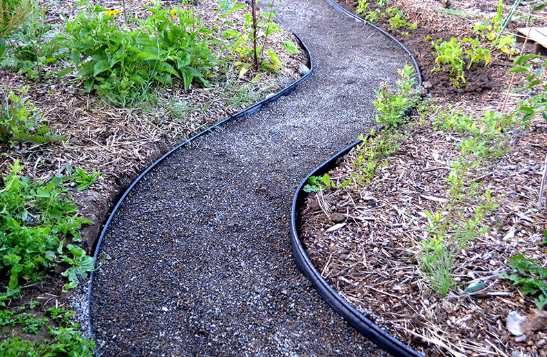
These are field notes rather than a pitch. The loop in question is four feet wide, lawn on one side, a swale on the other that runs hard from November on, which describes a few thousand common areas across Washington County. What follows is what actually happens to each material over a winter, and what keeping either one walkable costs a volunteer board.
Gravel Migrates, Bark Knits Together
Loose gravel on a flat path is a pile of small rocks with nothing holding them to each other. Every footstep nudges a stone downslope, and every heavy rain floats the fines out from between the larger pieces until the surface is a set of ruts with rock berms along the shoulders. Water writes the route, and the gravel just follows it. Bark behaves differently because the pieces are fibrous and irregular, so they hook together and mat down under traffic instead of rolling apart. That mat is the thing a board is actually buying: a surface that compresses, sheds water sideways, and shows up the next morning still shaped like a path.
Ninety Wet Days Reshape Any Loop Path
The Portland and Vancouver area does not get dramatic rain. It gets persistent rain, and persistence is what moves material. Thirty year climate normals put November through March between 4.7 and 7.4 inches a month, five months in a row of steady saturation instead of a handful of storms a crew can schedule around.
Rain that arrives an eighth of an inch at a time never scours a path in one memorable event. It keeps the surface saturated so that every step displaces a little more than it would in July, which is why the damage looks gradual right up to the week it looks terrible. Gravel gives up a bit of its bond on each of those days. Bark, once it has matted, gives up very little.
See also: Temporary Boiler Hire: Keeping Businesses Running During Planned and Emergency Works
What Crews See On Repeat Re-Spread Calls
Job after job, the same forty feet fails first. It is the low corner where the path bends toward the swale, and no amount of raking fixes it, because the problem is grade rather than material volume. A crew called back for a third re-spread in one winter is usually not adding new rock to the whole loop; it is robbing the high end to patch the low one, which buys about six weeks.
Nobody really knows how much gravel leaves a path like this in a season. I have never seen a property weigh it, and I doubt anyone will, because the material loss hides inside a labor invoice where it looks like raking rather than replacement. That accounting quirk is part of why a switch to bark dust Tualatin OR yards deliver by the truckload keeps getting postponed another year.
Depth And Edging Decide How Long Bark Lasts
Depth is where most bark paths are lost. Two inches looks generous on delivery day and is thin by February; three to four inches of walk-on grade, meaning bark screened and sized fine enough to stay put underfoot rather than roll away from it, is what carries a path through a full wet season. Edging matters nearly as much and costs far less. A path with turf on both sides and no border loses its shoulders first, because mowers throw material outward and walkers cut the inside of every bend. Steel or bender board along the low side, set half an inch proud of finish grade, keeps the mat contained where it was laid. Blowing the material in rather than barrowing it is the other half of the equation, since a hose reaches the far side of a swale without putting a single wheel track across the turf and lays an even depth instead of the dumped and spread lumps that settle at different rates.
Week One To Month Three On New Bark
The first week feels too soft. Fresh bark sits high and gives underfoot, and someone on the board will call to ask whether it went down too deep; it did not, it simply has not been walked in yet. By month one the surface has knit and dropped roughly half an inch, and the first real wet spell shows where water crosses the path rather than runs along it, which is useful information nobody had while the gravel was hiding it. Month three is the honest test. Thin spots turn up at the bend, at the mailbox cut through, and anywhere dogs pivot, and those spots want a wheelbarrow and an hour, not a crew and a truck.
Budget One Bark Top Up, Not Four Re-Spreads
Run the loop as a planned line item instead of a series of small emergencies. Six hundred feet at four feet wide is 2,400 square feet, which at three inches deep works out near 22 cubic yards for a full install, with the following autumn’s top-up closer to seven or eight yards. Set that against four crew visits that add no new material at all and the annual number lands in the same neighborhood, except one version leaves a path behind. Labor is also the side of the ledger getting more expensive rather than less. A June 2026 industry staffing writeup from Stealth Agents put seasonal turnover across landscaping at 60% to 70%, with replacing a field worker costing 20% to 30% of that worker’s annual pay, and costs like those end up inside the hourly rate a board pays for every repeat visit.
The board in this example did not save a dollar in year one. The install cost roughly what a winter of raking had cost, which is the part nobody enjoys hearing. It saved in year two, saved again in year three, and stopped organizing Saturday work parties to fix a surface that was never going to hold in the first place. A path that holds its shape through ninety wet days is worth more to residents than one that gets repaired four times, and it is cheaper to own by the second winter.